

Report on a two-day training of Nurses and Midwives from PHCs in Akwa Ibom State on the management of common health conditions in pregnancy
Date: September 23 to 24, 2025
Venue: Uyo, Akwa Ibom State, Nigeria
Introduction
The Women’s Health and Action Research Centre (WHARC), in collaboration with the United Nations Population Fund (UNFPA), organized a two-day training for nurses and midwives from PHCs in Akwa Ibom State on the management of common health conditions in pregnancy. The training aimed at strengthening the capacity of these frontline health workers at the primary health care centres (PHCs) in the prevention, early detection, and management of pregnancy-related and postpartum complications. This will help to achieve the dire goal of improving the quality of maternal care provided at the PHC level, and the reduction of maternal and child morbidity and mortality.
Training Objectives
The key objectives of the training were to:
- reinforce an overview of common medical conditions in pregnancy as it pertains to the Nigerian context;
- improve the capacity of primary healthcare providers in the prevention, early detection, and management of malaria in pregnancy;
- improve the capacity of primary healthcare providers in the prevention, early detection, and management of anaemia in pregnancy;
- improve the capacity of primary healthcare providers in the prevention, early detection, and management of postpartum complications as it pertains to the Nigerian context;
- improve understanding of the need for upward/vertical referrals and the referral protocols, including the pre-referral management at the PHCs, in relation to the management of the common medical conditions in pregnancy; and
- reinforce understanding of infant nutrition, including breastfeeding, and the need for immunisation, including the national immunisation protocol, and the use of post-partum family planning.
Participants
A total of 25 nurses and midwives participated in the training. Participants were drawn from different PHCs in Akwa Ibom State, with representation across both urban and rural facilities. In attendance were also a representative from one of WHARC’s partnering Civil Society Organization, the Executive Secretary of Akwa Ibom State Primary Healthcare Development Agency (AKSPHDA), Dr. (Mrs.) Eno Angela Attah, and two other representatives from the AKSPHDA.
The training methods utilised
The training adopted pre and post-test assessment, interactive lectures, case-study presentations, group discussions, and sharing of real-life scenarios encountered from clinical practice by both the facilitators and the nurses and midwives in attendance.
Summary of Day 1 (September 23, 2025)
The following were the topics covered:
- An overview of common medical conditions in pregnancy within the Nigerian context: malaria, anaemia, postpartum haemorrhage, hypertensive disorders, puerperal infections, thromboembolic disorders, and mental health conditions.
- Malaria in Pregnancy: prevention (use of insecticide-treated nets, intermittent preventive therapy); treatment plan and treatment considerations at the different trimesters, referral protocol in the management of malaria in pregnancy, complications and sequalae of malaria in pregnancy.
- Anaemia in Pregnancy: Classification (mild, moderate, severe) based on haemoglobin levels and packed cell volume (PCV), the causes, risk factors, and clinical signs of anaemia in pregnancy. Also, the prevention, early detection, and management strategies (depending on the level of severity). The complications of anaemia in pregnancy and the
referral protocol at the PHCs in the management of this medical condition were also established.
Key Takeaway from Day 1: Strengthened knowledge in relation to the need for prevention, early detection, and prompt management of common medical conditions in pregnancy, especially anaemia and malaria, so as to avoid further complications, including maternal and infant death.
Summary of Day 2 (September 24, 2025)
The following were the topics covered:
- Overview of postpartum complications: definition of postpartum period (42 days or 6 weeks after delivery); importance of this period in relation to maternal and child health and survival; common occurring postpartum complications within the Nigerian context (postpartum haemorrhage, hypertensive disorders of pregnancies, puerperal infections, thromboembolic disorders, and mental health conditions such as depression and psychosis); management of these common occurring postpartum complications, including establishing referral protocol.
- Breastfeeding and infant nutrition: Benefits of breastfeeding in relation of maternal and child health and survival, and effective breastfeeding strategies (timing, recognising hunger cues, appropriate breastfeeding clothing, positioning, common encountered problems in relation to breastfeeding and how to address them).
- Post-partum counselling: National Infant immunisation schedule, the role of PHCs in immunisation, safe vaccine administration, addressing vaccine hesitancy and caregivers concern), and counselling for post-partum family planning (the importance, the various types available, and known side effects).
Key Takeaway from Day 2: Improved understanding of the immense need for quality postpartum care at the PHCs so as to improve maternal and child health and survival.
Outcomes of the Training
- Improved knowledge about the list of common health conditions that occur during pregnancy and in the post-partum period within the Nigerian context.
- Improved knowledge and practical competence regarding the management of anaemia in pregnancy, malaria in pregnancy, and post-partum complications, including upward/vertical appropriate referral protocols.
- Improved knowledge and practical competence on the provision of high-quality counselling on the use of postpartum family planning methods
- Improved skills in exclusive breastfeeding support and infant nutrition counselling.
- Improved knowledge on the application of safe vaccine practices in routine PHC services and improved skills in immunisation counselling
- Enhanced collaboration and peer learning among nurses and midwives.
Challenges highlighted by participants
- Some participants requested more hands-on practical demonstrations in relation to the management of pregnancy and post-partum complications.
- The need for continuous refresher training was identified.
- Non-availability or prolonged stock-out of resources (e.g., drugs, blood transfusion services) at the PHC level were highlighted as a challenge.
- Challenge in receiving feed-back from the higher-level health facilities about the maternal emergency cases referred was also identified.
Conclusion
The 2-day training successfully improved the knowledge and practical competence of 25 nurses and midwives from PHCs in Akwa Ibom State, Nigeria, regarding the effective management of common pregnancy and postpartum complications within the Nigerian context. This will thus improve the quality of maternal care provided at the PHC level, thereby reducing the risk of maternal and child morbidity and mortality. All of these are in line with WHARC/UNFPA’s, and hence global, maternal and child health agenda.

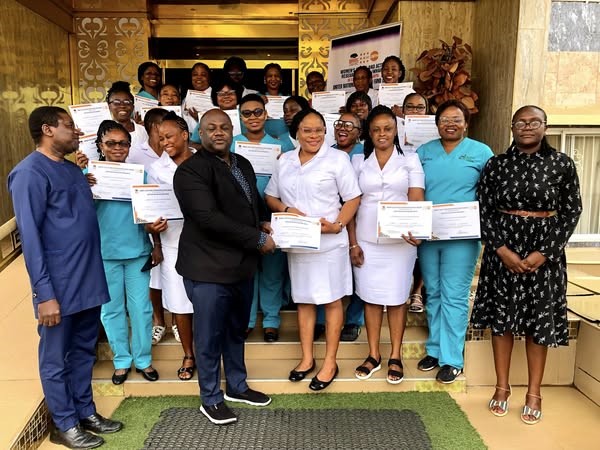
A group photograph of the participating nurses with the training facilitators

A group photograph of the participating nurses with the training facilitators, the Executive Secretary of Akwa Ibom State Primary Healthcare Development Agency (AKSPHDA), Dr. (Mrs.) Eno Angela Attah, and other representatives from the AKSPHDA in attendance

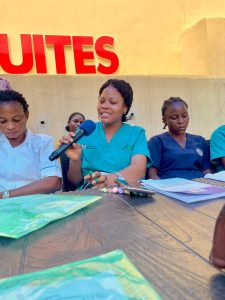
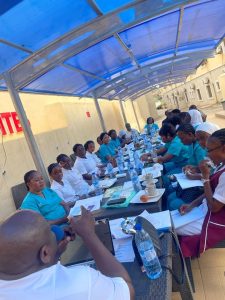
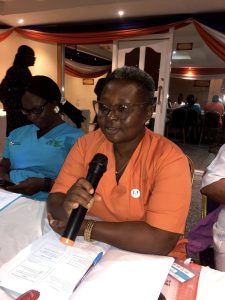
Interactive learning at the training