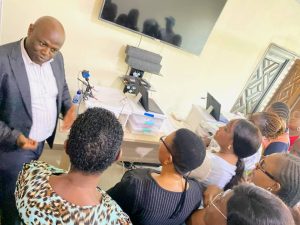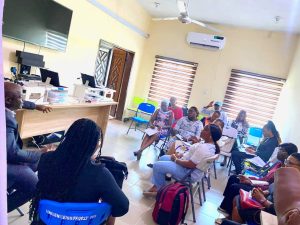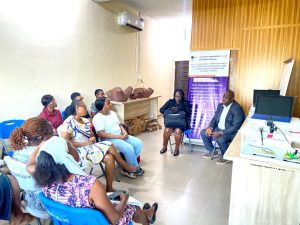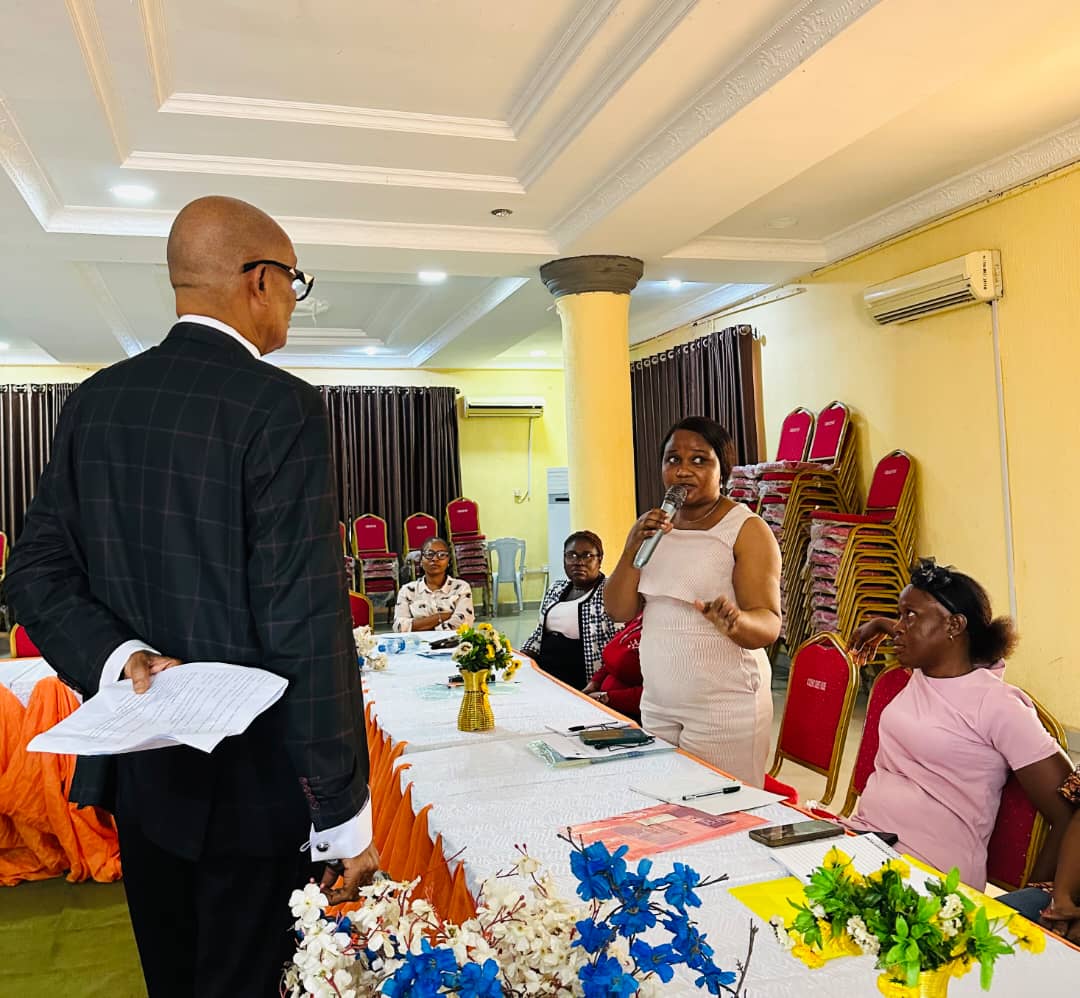
The Women’s Health and Action Research Centre (WHARC), a Non-Governmental
Organisation (NGO) with headquarters in Edo State, organized a three-day training workshop on
the 16 th to 18 th of December 2024 with the theme ‘improving the quality of maternal health care,
including a simulation training using high fidelity manikins’. The training targeted Primary
Heath Care (PHC) providers, nurses and/or midwives, from different parts of Edo State. To
achieve this, specific objectives were put in place. The specific training objectives were to
improve the PHC providers’ knowledge of the principles and practice of quality maternal
healthcare, including the referral process; and to build the capacity of PHC providers to
implement quality maternal healthcare services at the PHC level, including the referral process.
The participants included healthcare providers from PHCs in Oredo Local Government Area
(LGA), Ovia North East LGA and Egor LGA, all in Edo State. Other participants included staff
and students from the Social Work Department and the Centre of Excellence in Reproductive
Health Innovation (CERHI), at the University of Benin (UNIBEN), Benin City, Edo State,
Nigeria.
Several presentations followed in line with the training objectives by the different speakers,
including one done by the Chief Executive Officer of WHARC, Professor Friday Okonofua, who
spoke on WHARC’s interventions on improving women’s access to maternal healthcare. He
gave an overview on WHARC’s work with Okpekpe Community in Edo State, Nigeria, to
improve women’s access to maternal healthcare. According to him, the project led to the design
and implementation by WHARC of a mobile app called ‘Text4Life’, with the aim of connecting
pregnant women with emergency transport and obstetric care in the rural parts of Nigeria.
According to Professor Okonofua, the use of this mobile app within Okpekpe community led to a
900% increase in the utilisation by pregnant women of the PHC in the community.
The following essential areas of concern were identified by the participants:
i. The need for more nurses. It was identified that nurses are fewer compared to the
community health extension workers (CHEWs).
2
ii. CHEWs taking over the roles of nurses. Organogram should be spelt out in the PHC,
clearly documenting and separating the role of nurses and CHEWs within the PHCs.
iii. Continuity of government policy like provision of free mother kit.
iv. Provision of security at the PHCs. Most women give birth at night and the nurses need
good security at night to encourage the night shift.
A consensus was reached that, as healthcare providers, they would fulfil their roles in delivering
quality care, even if the government does not supply all the necessary resources for a standard
PHC. This is due to the emphasis placed by the speakers at this training workshop that the
elements of quality of maternal health care are in two parts; provision of care from the health
care institution, and the quality of care experienced by the patients. Both parts of the elements of
quality of care will ultimately affect the utilization of maternal health care at the PHCs.
The training ended with a simulation exercise using High Fidelity Manikins. This took place at
the simulation laboratory in CERHI, UNIBEN. The participants had hands-on experience in
simulated emergency scenarios demonstrating decision-making skills in managing obstetric and
newborn emergencies.
In conclusion, it was generally agreed that there is a need for improved basic emergency
obstetric and newborn care, including referral systems. These include enhancing healthcare
worker capacity, addressing health system and community barriers to the utilisation of maternal
health care, promoting family planning, and community education to reduce maternal and
neonatal morbidity and mortality. Additionally, the participants agreed that there is a need for
more simulation training on the management of obstetric emergency complications. Finally, the
organisers expressed gratitude to all the participants who were present.