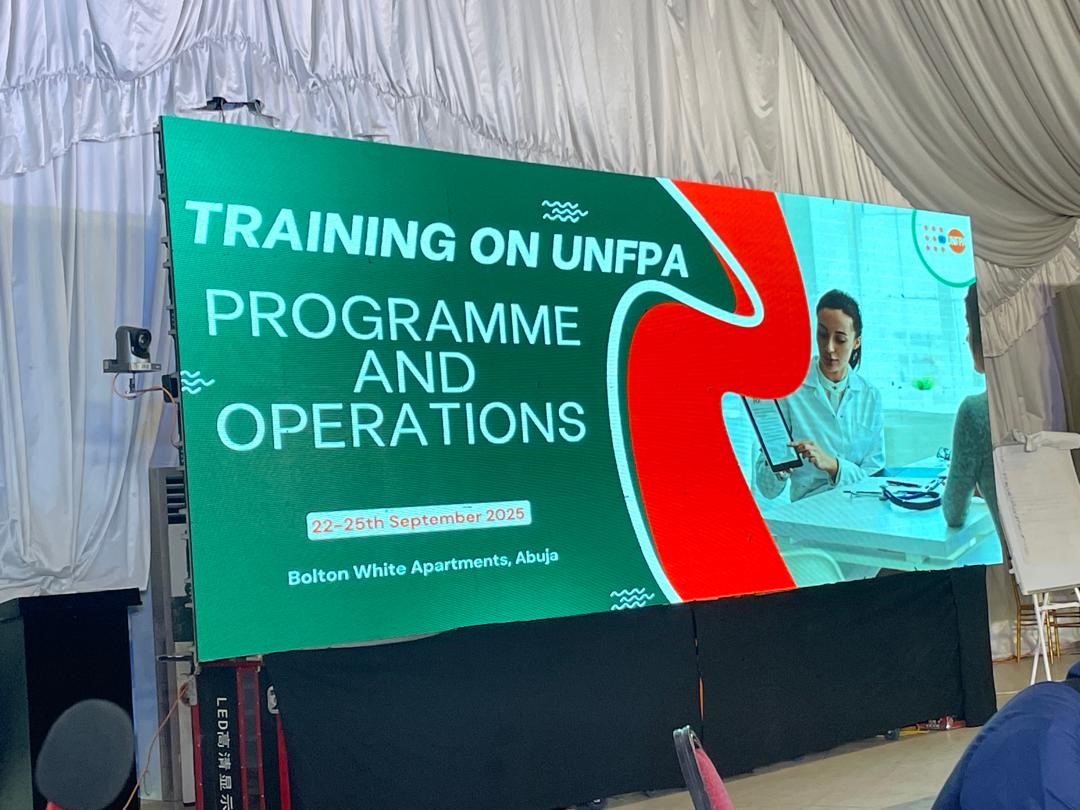
Report on UNFPA Implementing Partner Training Program
Venue: Bolton White Apartments, Abuja
Date: 22nd – 25th September 2025
In Attendance were: Two person’s each(Program and Finance officers) from about 30 implementing partners, and UNFPA Finance and Program Officers
Introduction
The UNFPA organized a four-day training for Implementing Partners (IPs) to strengthen programmatic, financial, and operational capacity, improve compliance, and enhance alignment with UNFPA’s strategic priorities. The training brought together representatives from government and NGO IPs, focusing on compliance, fraud prevention, assurance activities, use of the Quantum Plus and the integration of the UNFPA 9th Country Programme (CPD) and Transformative Results (3TRs).
Day 1 Highlights
The opening day included welcome remarks, pretest and setting of objectives, followed by sessions on:
- Compliance with UNFPA procedures – covering IP agreements, workplan development, implementation, and procurement processes
- Fraud Awareness – highlighting fraud definitions, enablers, and the importance of prevention, detection, and response. IPs were reminded of UNFPA’s zero-tolerance fraud policy and their roles in safeguarding resources
- Fraud Awareness for Implementation
- Sub-Implementing Partner Management – emphasizing the need for oversight and accountability in financial and programmatic reporting.
- Procurement Principles and Process
Day 2 Highlights
The second day focused on Assurance Activities:
- Micro-Assessment Findings – 11 government and 12 NGO IPs were assessed: 10 low risk, 7 moderate, 4 significant, and 2 high risk. Gaps included weak documentation, unsupported transactions, and inadequate procurement records.
- Preparing for Spot Checks and Audits – IPs were trained on maintaining audit trails, strengthening asset registers, completing procurement documentation, reconciling bank statements, and stamping supporting documents.
- Recommendations emphasized ensuring accuracy of FACE forms, direct vendor payments, orientation for transferred staff, and timely resolution of previous audit findings.
- A session on Health Systems Approach to the 3TRs introduced strategies to embed SRH/GBV services into national health systems to strengthen sustainability and equity.
Day 3 Highlights
Day 3 provided an overview of the 9th UNFPA Country Programme (2023–2027), aligned with SDGs and Nigeria’s development agenda. Key themes included:
- Ending unmet need for family planning, preventable maternal deaths, and GBV/harmful practices.
- Addressing disparities, particularly in the North-East and North-West.
- Applying six accelerators (human rights, data, innovation, partnerships, resilience, reaching the furthest behind).
- The day also included hands-on sessions on the Programme Management Cycle, workplan templates, and a refresher on Quantum Plus for financial and programmatic reporting.
Day 4 Highlights
The final day was dedicated to practical sessions on Quantum Plus, including:
- E-FACE management
- Workplan indicator reviews and validation
- Workplan Progress Reports (WPRs), workflows, and supporting evidence requirements. IPs presented and validated their 2025 work plans, followed by discussions on activity reporting templates, way forward, and closing remarks.
Conclusion
The training strengthened the capacity of IPs to comply with UNFPA’s operational standards, manage risks, and align their interventions with the 9th CPD and 3TRs. Key takeaways included the importance of robust documentation, accountability, fraud prevention, and integration of SRH/GBV services into broader health systems. Moving forward, IPs are expected to apply these lessons to improve program delivery, financial integrity, and reporting accuracy.
Pictures